That familiar sensation strikes us all: bundled up in a puffy coat with multiple layers underneath, yet the chill finds its way in regardless. It doesn't happen suddenly, but creeps in steadily—starting with your fingers, followed by your toes.
That instant demonstrates precisely how insulation works. A down jacket doesn't generate warmth—it preserves the body heat you naturally produce. Once your heat generation diminishes—whether from standing motionless or prolonged exposure to cold—there's simply less warmth to keep in.

This highlights the fundamental distinction between thermal insulation and active heating garments. Discover what each method accomplishes, which situations call for one alone, and where a single approach falls short.
What insulating clothing does
The core of insulation lies in capturing air. The fundamental idea is simple: materials themselves don't provide warmth—rather, the stationary air they hold does. Since air conducts heat poorly when it remains still, this trapped air becomes the key to thermal protection.
Down, wool, fleece, and synthetic batting all serve a single purpose: to trap a stable layer of air between your body and the environment. The deeper and more consistent this air barrier becomes, the slower your body heat dissipates into the cold.
What Sets These Materials Apart
- Down provides exceptional warmth relative to its weight, yet its insulating ability significantly diminishes when exposed to moisture.
- Wool, especially merino varieties, maintains partial insulation even in wet conditions and manages moisture more effectively than alternatives.
- Synthetic insulation resists moisture damage and dries rapidly, delivering comparable or superior loft performance at equivalent quality levels.
- Fleece delivers adequate thermal protection but permits wind penetration, making it ideal as an intermediate layer rather than outer protection.
Fabric insulation is quantified through standardized measurements—clo and tog values—that express a material's thermal resistance. While these metrics provide a practical way to evaluate and compare different products side by side, they capture just a single factor: the rate at which heat from your body dissipates through the material.

The limitation—and it’s structural
The effectiveness of an insulated garment relies on the heat your body generates. When you're active—whether walking, working, or exercising—your muscles produce warmth that powers the system, with the insulation layer amplifying that effect.
The moment heat generation decreases, the process inverts. When seated, motionless, waiting on a ski lift, or pausing during manual labor, insufficient warmth remains to maintain. Additional clothing helps, yet it merely decelerates the cooling cycle already in progress.
This explains that common experience: feeling cold even when you’re bundled up.
What a heated garment adds
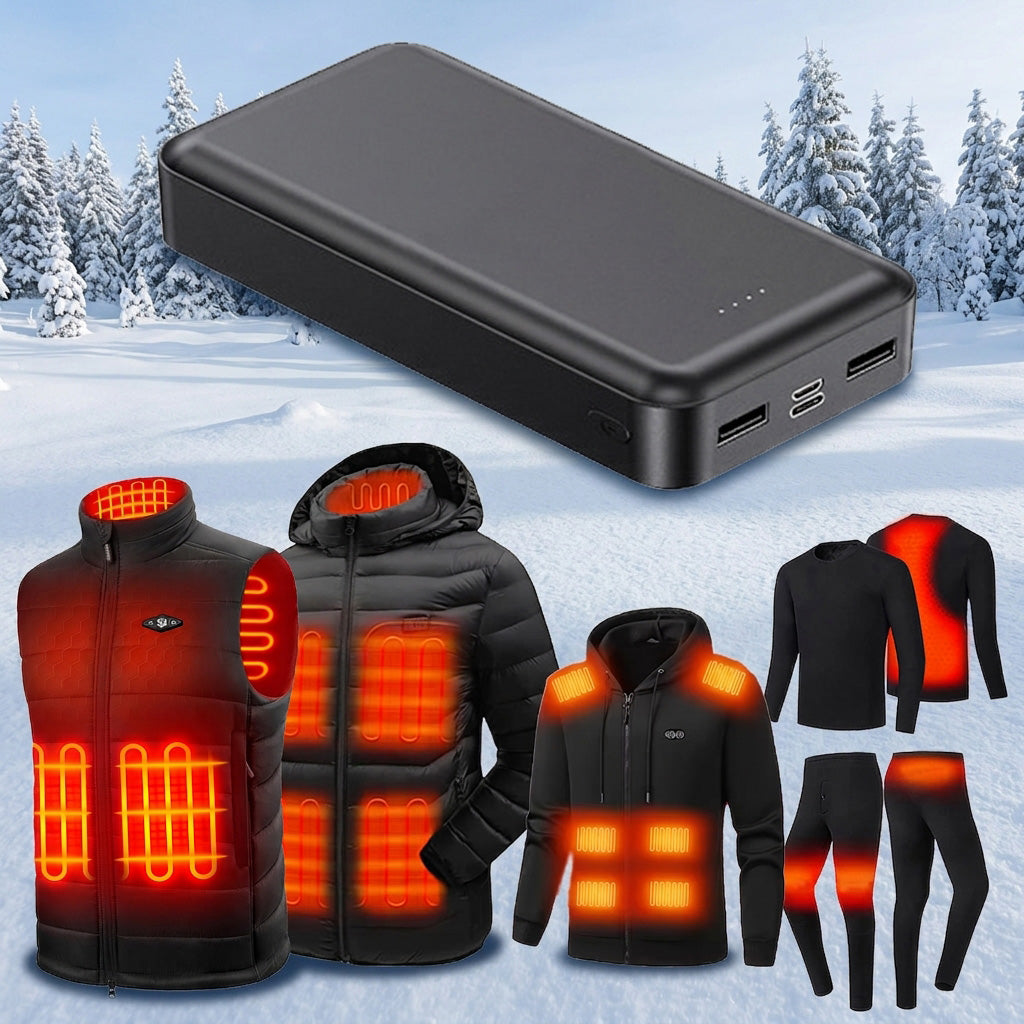
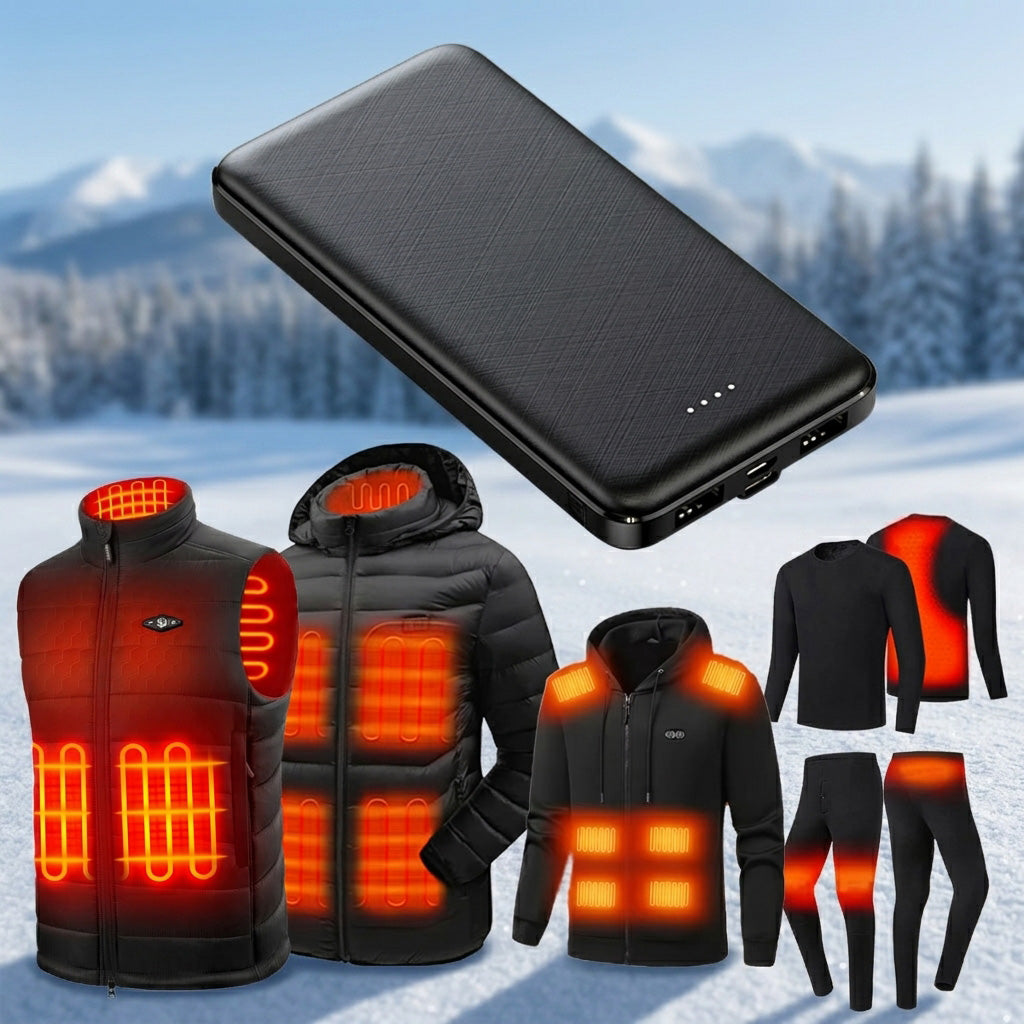
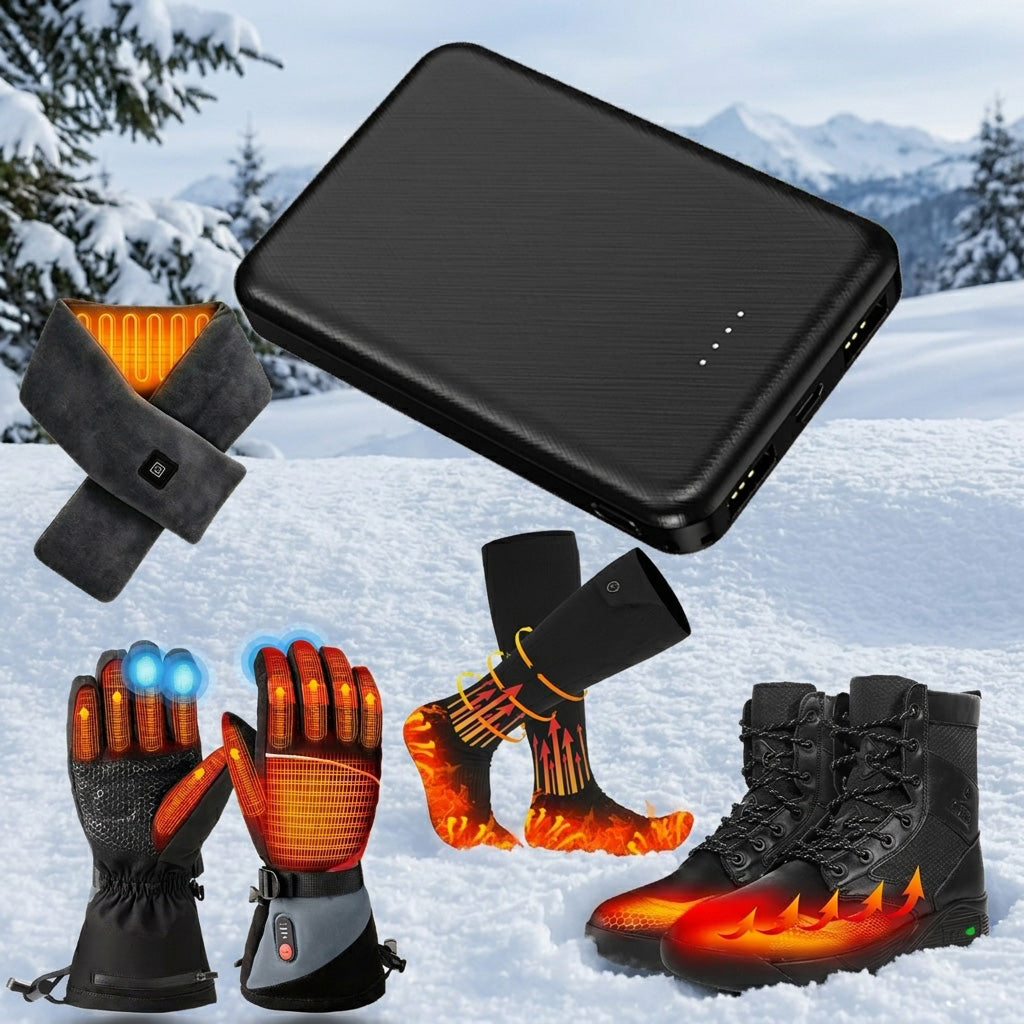
Heated apparel incorporates an external thermal source through built-in heating elements woven into the material. These elements are powered by a detachable battery, which generates warmth and delivers it directly to targeted zones.
The distinction lies in fundamental purpose, not magnitude. Insulation reduces thermal loss, whereas heating generates warmth. One rests within your control; the other does not.

In practical terms, this changes three things:
- You no longer need to stay active to stay warm, as heat is generated independently of muscle movement.
- Heat output can be customized across multiple settings, offering flexibility that traditional insulation cannot match.
- Strategic zones receive focused warmth—including the back, lower back, chest, and hands—precisely where cold exposure is most noticeable.
When insulation is enough, and when it is no longer enough
The question isn’t which is better, but what situation you’re in.
Insulation is sufficient when you’re generating heat
During brisk walks, running sessions, intense workouts, or uphill hikes, your body generates substantial heat naturally. The primary concern shifts to preventing overheating and managing the cooling process via perspiration. In these high-activity scenarios, a heated garment becomes redundant.
It is no longer sufficient in four situations
- Extended periods of stillness during frigid conditions: seated desk environments, field hunting, angling pursuits, outdoor event viewing, or standing watch at job sites
- Switching between intense activity and recovery: the chairlift ride between slopes, time spent outdoors, pedaling followed by stopping at a traffic signal
- Damp or windy cold: which speeds up the dissipation of warmth and diminishes its insulating capacity
- Poor circulation in the extremities, particularly in cases of Raynaud’s syndrome, where fingers get cold despite wearing highly insulating gloves
The founding of Firoth was actually inspired by this very condition, as one of our founders personally experiences it.
Heated clothing by use
It all comes down to which areas you need to stay warm and what layers you plan to wear on top.
When worn as a mid-layer beneath your jacket, a heated zip-up hoodie provides targeted warmth to your core and lower back. Perfect for transitioning between heated indoor spaces and cold outdoor environments.
A heated softshell jacket serves as an excellent outer layer, merging wind resistance with thermal comfort to address multiple needs simultaneously. For extreme cold conditions, the ESSENTIAL heated down jacket delivers enhanced insulation performance. Additional options encompass various heated jacket styles and insulated down variants.

Three guidelines for deciding between a heated jacket and another garment:
- A heated jacket functions as an outer layer, shielding you from wind while delivering warmth—making it ideal for prolonged outdoor activities.
- A heated down jacket combines insulating fill with an integrated heating system, making it ideal for extreme cold conditions.
- A vest or hoodie works as a layering piece beneath your current jacket, perfect when you prefer to keep your existing outfit intact.
Heated jackets and insulated heated down jackets serve different purposes, rather than representing different budget categories.
Our heated vest collection focuses warmth directly on your core while keeping your arms completely free—perfect for hands-on work and technical applications. When cold weather arrives, heated gloves step in to protect your fingers and hands, delivering comfort long before a heavier outer layer becomes necessary.
Which heated clothing for which winter?
The decision hinges less on what the thermometer shows and more on your outdoor activity. Four common situations emerge repeatedly.
- Outdoor professions such as construction, freight handling, farming, and highway upkeep demand extended hours of labor. Work rhythms cycle between intense physical activity and rest periods, frequently in wet or humid conditions. Heated jackets and insulated vests perform optimally in these environments when layered beneath standard occupational attire.
- Winter pursuits like skiing, alpine hiking, and mountain biking demand versatile gear. The rhythm of intense activity followed by stationary periods is most pronounced during these seasons—it's on chairlifts and rest stops where heated apparel truly shines.
- Static outdoor pursuits—such as hunting, fishing, wildlife photography, and sports coaching—present unique thermal challenges. Without the body heat generated by continuous movement, insulation alone cannot provide adequate warmth indefinitely.
- Everyday activities and movement: cycling to work, standing at transit stops, strolling through cold weather. A subtle heated jacket does the job of three thick garments in these moments.
Heated apparel doesn't substitute for your cold-weather collection—rather, it extends how far that collection can take you. Throughout a typical working day, a heated jacket operating on its minimum warmth level outperforms an oversized down coat that compromises mobility.
Battery Life and Capacity
It's a question we hear repeatedly, and the response is straightforward: how long your battery lasts comes down to one thing — which heat level you choose. Use the lowest setting, and your garment will run considerably longer than it would on the highest.
In real-world use, starting with the maximum setting allows you to reach your target temperature rapidly. Once achieved, reduce the setting by one level to sustain consistent warmth. This approach lets you maintain comfort throughout the entire day without interruption.
Its removable battery offers two distinct advantages: detach it before washing to protect the electronics, or pack a spare to extend runtime during extended adventures.
Three habits can significantly extend the battery life throughout the day:
- Begin with the highest setting, then reduce the power once you reach your target temperature instead of keeping it at maximum throughout.
- Deactivate the device during intense physical activity, as your body naturally produces sufficient warmth at these times, then reactivate it once exertion ceases
- Maintain battery warmth during storage: prolonged exposure to cold environments can temporarily diminish the capacity of lithium-based batteries
Cold-Weather Standards
Workplace cold-weather protective clothing is governed by two key standards: EN 342, which sets requirements for insulated protective suits, and EN 511, which establishes guidelines for gloves designed to shield against both convective and contact cold exposure.
These benchmarks assess insulation capability, not the existence of an active heating mechanism. Consequently, a piece of clothing may fully satisfy these benchmarks while still failing to keep you warm during periods of inactivity, because they test thermal retention rather than thermal generation.
Key points to remember before purchasing for professional use:
- Insulation ratings and heating capabilities are separate performance metrics—an insulation standard provides no information about the latter.
- Heated apparel is typically layered beneath mandatory safety equipment, maintaining full regulatory compliance
- High-visibility requirements are controlled by separate standards and must be confirmed based on your specific work environment.
Care instructions: the real difference in everyday use
Many assume heated garments cannot be laundered, but this is a common misconception—they can be cleaned safely when you adhere to several key guidelines:
- Always remove the battery before cleaning
- Zip all closures shut and adhere to the care label instructions
- Let it air dry completely—avoid machine dryers and heat sources like radiators
- Keep your iron away from sections with integrated heating technology
- If storing for extended periods, keep the battery at approximately 50% charge in a cool, dry environment
Our most common question is straightforward: why isn't an exceptionally thick down jacket sufficient on its own? The reason is clear—it preserves your body's warmth rather than creating new heat. After standing motionless for twenty minutes, there's simply not enough body heat remaining to trap.
Conclusion
Insulation works by trapping body heat you naturally produce. Heated garments, by contrast, actively generate warmth when your own heat production isn't enough. They're distinct approaches to staying warm—not simply variations of the same solution.
Here's a straightforward guideline: when you're cold during activity, increasing your insulation is the answer. However, if you're cold while stationary, even with multiple layers, adding more insulation won't fix the issue.
Whatever the weather. Firoth, in any weather.
FAQS
Does heated clothing replace a down jacket?
Not at all—in fact, it works in tandem with it. A heating system requires proper insulation to retain the warmth it produces; without it, heat escapes rapidly into the surrounding environment. Optimal performance is achieved when both elements work together.
Why am I cold even though I’m bundled up?
Insulation merely decelerates the dissipation of warmth from your body. During periods of inactivity or prolonged cold exposure, your body generates less heat, leaving insufficient warmth to preserve. Layering garments does not create additional heat on its own.
How long will a heated garment last on a single charge?
The duration relies entirely on your chosen heat level. Start with the highest setting to reach your target temperature, then lower it by one level for maintenance. Carrying an extra battery can extend your runtime significantly during extended trips.
Can you wash a heated garment?
After removing the battery, adhere to the care instructions provided on the label. Allow the item to air-dry completely—do not place in a dryer—and avoid ironing the heating elements.
What do the EN 342 and EN 511 standards mean for heated clothing?
Cold protection is assessed by insulation effectiveness rather than built-in heating elements. This means that even standards-compliant garments might not keep you warm during periods of inactivity.
Is heated clothing suitable for Raynaud’s syndrome?
Our products address temperature regulation challenges, enabling you to pursue your chosen activities—a philosophy rooted in our brand's founding. While they manage thermal discomfort effectively, they are not a medical treatment and cannot replace professional healthcare when symptoms are severe.
Is the battery removable?
Absolutely. Our heated apparel features a detachable battery pack—remove it before washing, keep a backup unit handy, and wear the garment as standard clothing without power whenever you prefer.