Two hours—that's how long a heated garment lasts when running at full power without pause. Switch to a smarter approach, and you'll stretch that to seven hours on a single charge.
That variance—spanning two to threefold—isn't determined by device model, manufacturer, or ambient conditions. Instead, it hinges on one decisive element: the temperature adjustment, which the majority of people tend to keep at its highest level.
Discover the genuine battery endurance for each product, understand the factors behind these differences, and learn how to maintain power throughout your entire day.
Heated jackets, down jackets, and vests
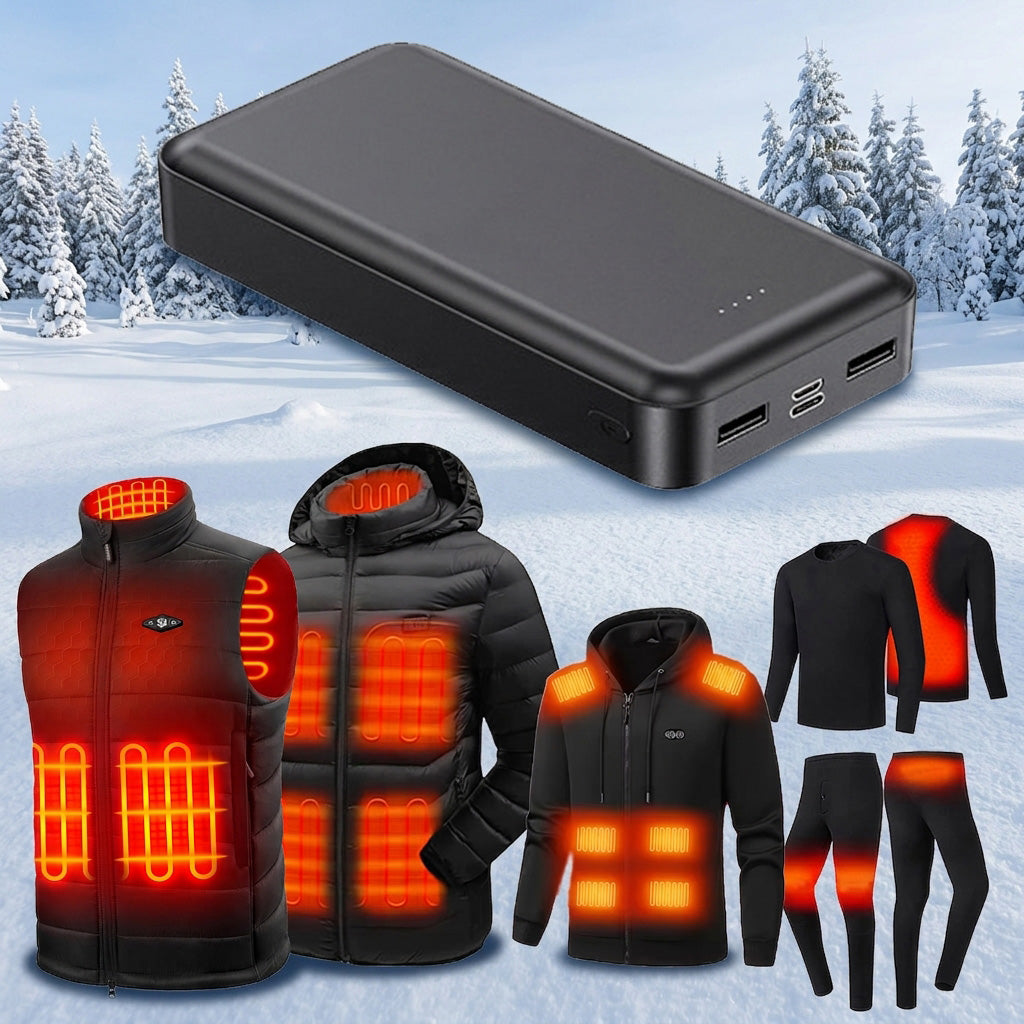
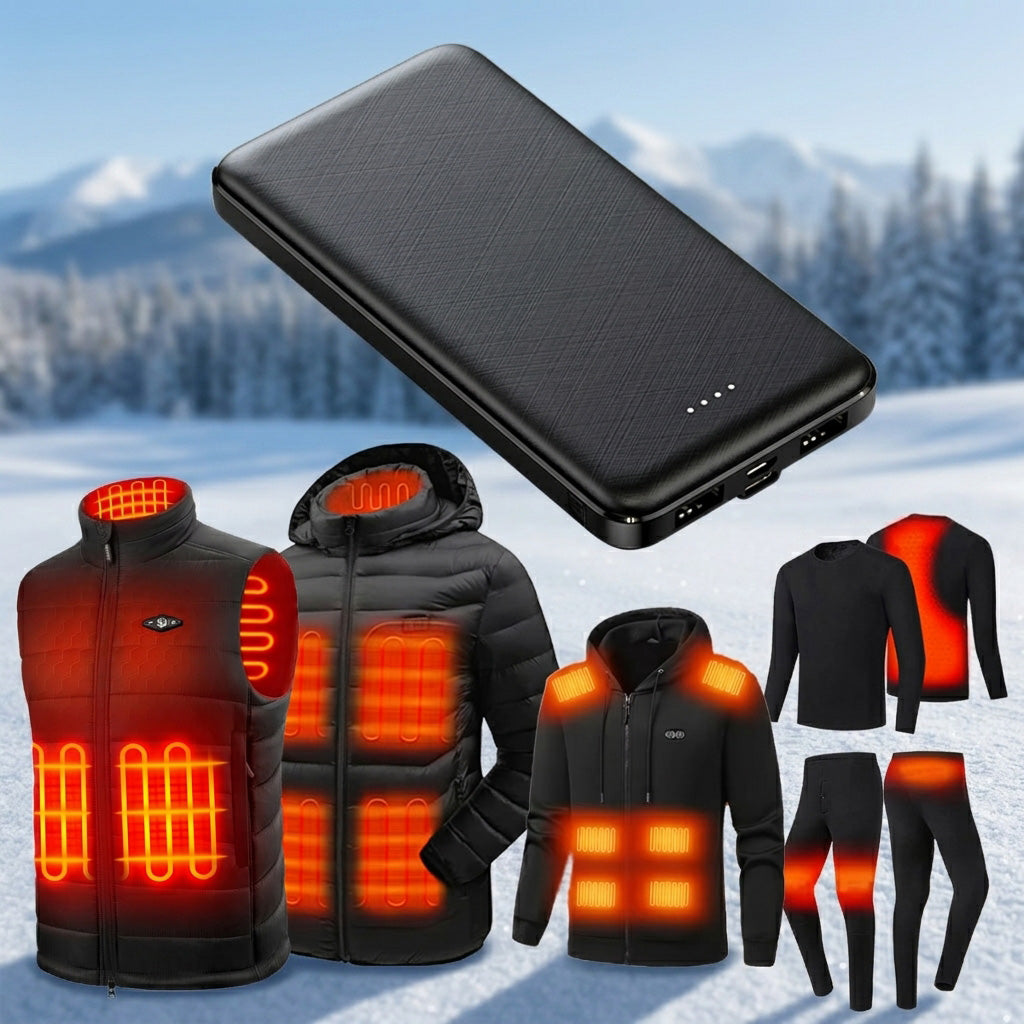
Powered by the BATV01 battery, these garments deliver 10,000 mAh capacity at 5 V with a total weight of 200 grams.
-
Low setting: Expect 6 to 7 hours of continuous battery performance
-
Medium setting: Battery endurance ranges from 3 hours 30 minutes to 4 hours 30 minutes
-
High setting: Runtime drops to 2 to 3 hours at maximum power
Heated gloves
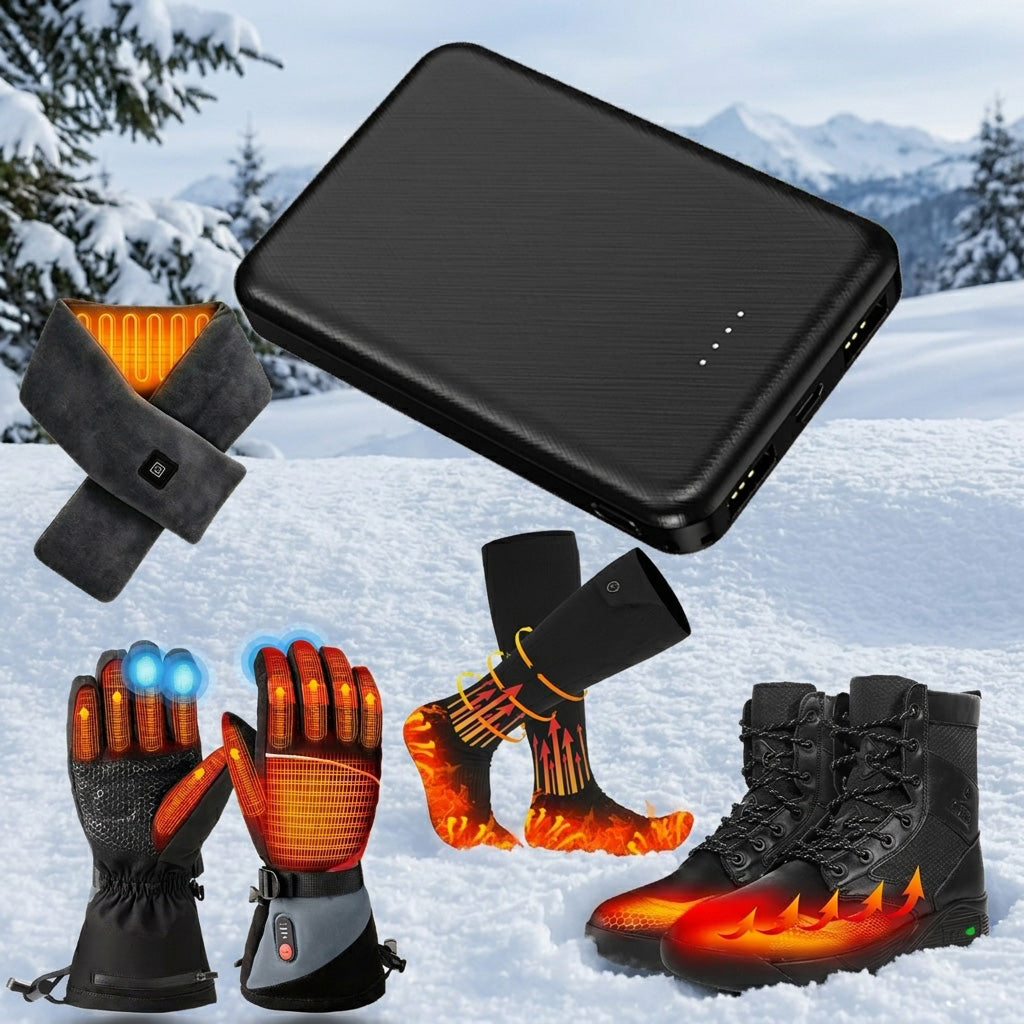
Each glove features a compact BATG01 battery with a 2,200 mAh capacity and 7.4 V output, weighing only 65 grams. The battery is designed to fit discreetly within the glove cuff.
-
Low setting: 5 to 6 hours of battery life
-
Medium setting: 3 to 4 hours
-
High setting: 1 hour 30 minutes to 2 hours 30 minutes
The distinction between these two product lines is straightforward: a glove battery needs to stay lightweight to avoid restricting hand mobility, which naturally constrains its power output. Our slim heated glove tips the scale at just 145 grams, battery included.
What Really Affects Battery Life
Five factors, in order of importance.
-
The heat setting, by far the most important: This is what accounts for the variance between one and three times the battery duration.
-
External temperature plays an indirect role: as conditions grow colder, the tendency to increase heating intensity becomes stronger.
-
Usage patterns matter: disabling it during exercise sessions can significantly enhance performance
-
The cold experienced by the battery itself: Lithium batteries experience temporary capacity reduction in cold conditions, making it essential to maintain body heat proximity for optimal performance.
- How long a battery has been in use impacts its ability to perform consistently over time.
Wear and tear over time
Our Firoth batteries deliver a rated lifespan of up to 500 charge cycles when used under ideal conditions. It's important to note that one cycle equals a complete charge, not individual charging sessions—so two partial recharges that together equal a full charge count as just one cycle.
Through repeated winter cycles, the impact unfolds across multiple seasons. Battery degradation occurs incrementally rather than abruptly: an older battery's runtime diminishes over time, yet it continues functioning reliably without failing instantly.
Why the perceived warmth doesn’t depend solely on battery life
A detail frequently missed in product comparisons: two heated garments claiming identical battery duration don't automatically deliver the same comfort experience. The sensation of warmth is shaped by three separate elements.
-
The number of heated zones: Increased quantity enhances heat distribution, yet simultaneously raises energy consumption.
-
The location of these zones: When heat is applied to the back and lower back region, it distributes evenly across the entire torso. In contrast, heat concentrated on a single pocket area remains localized and does not spread throughout the body.
-
The insulation of the garment itself: A heated down jacket retains the warmth it produces, whereas a lightweight version allows heat to dissipate.
This is precisely why a heated down jacket operating at a low temperature frequently delivers superior comfort compared to an uninsulated jacket running at maximum heat—while simultaneously offering triple the battery endurance.

How to make it last a whole day
Turn it up, then turn it down
Use the highest setting to reach your desired warmth level quickly, not to keep it running continuously. Once you've achieved comfort, lower the setting by a notch or two to sustain that warmth while dramatically improving battery performance. This single adjustment can double your usage time, extending it from approximately three hours to seven.
Turn it off during physical activity
During activities like walking, shoveling, climbing, or physical labor, your body naturally generates heat. In these moments, external heating is redundant and can be switched off. Simply reactivating it when you pause is sufficient. By toggling heat on and off throughout a day of alternating exertion and downtime, this straightforward practice can effectively double your battery longevity.
Bring a Second Battery
The easiest way to extend your time outdoors is with a spare battery. Portable batteries for heated jackets slip easily into any pocket and swap in mere seconds. Similarly, heated glove batteries are just as quick to replace. Browse our complete range of batteries and chargers to find what you need.
The takeaway is straightforward: across heated apparel for the upper body, all styles utilize an identical battery system and deliver equivalent runtime. Whether you choose a heated jacket, insulated down jacket, or vest, each garment operates for the same duration on a given heat setting.
The gloves deserve attention—and it's about mass, not capability: nobody enjoys carrying a 200-gram battery around their wrist.
Which model to choose based on duration of use
-
Brief trips under two hours: any heated product works well, even when set to maximum heat
-
Half-day outings: heated jackets and vests perform well on medium settings
-
Full day outings: use low intensity setting, or bring a second battery as backup, across all models
-
Extreme cold and inactivity: choose a heated down jacket, as its insulation reduces heat loss and lets you operate on a lower setting
Charging time and cost
With a 220 V USB AC adapter rated at 2A/5V, jacket batteries require 6 to 7 hours for a full charge, while glove batteries need 4 to 5 hours. An overnight charging session provides sufficient power to support your daily requirements.
When it comes to electricity costs, the impact is minimal: Firoth calculates roughly 1 cent per charge. This is something many customers overlook, often worrying about expenses that aren't really a concern.
Battery Life Depending on the Garment and Activity
The ideal setting ultimately depends on your activity and the layers you choose to wear.
-
Stationary outdoor activities: hunting, fishing, surveillance, guiding. Sustained moderate use throughout the day, with a spare battery ensuring extended operation.
-
High-demand environments: building sites, supply chain operations, and farming. Designed for moderate activity levels, with the ability to deactivate during strenuous tasks and reactivate during rest intervals.
-
Winter athletics: elevated settings during ascent phases, deactivated while descending. This cycling between modes is standard practice.
-
For commuting and two-wheeled vehicles: begin with a high setting during initial use, then adjust to a lower setting as your exposure time becomes constrained.
The heated softshell jacket is a prime example of this concept: beyond delivering warmth, it functions as a wind barrier that reduces heat dissipation, enabling you to operate at a lower power level for extended periods. This category extends to heated jackets and heated vests, with all such products classified as heated apparel.
Caring for the battery and the garment
Regular upkeep plays a crucial role in preserving battery longevity—which ultimately determines the driving range you'll enjoy years down the line.
- Always remove the battery before washing your device.
Charge using a USB AC adapter rated at 2A/5V input (typically sold separately).
- Disconnect the battery when not in use to avoid self-discharge and potential overcharging.
- Keep the item in a cool, dry place at room temperature during off-season months; ensure it is never stored completely empty.
- Let the item air-dry naturally—avoid machine dryers, radiators, and heat sources—and refrain from ironing any heated sections.
Whenever a customer reports that their garment isn't performing as expected, we ask one consistent question: what power level are you operating it at? In the vast majority of cases, the answer is the highest setting, maintained throughout the entire use. The power setting influences battery performance far more than any battery upgrade could.
Why Choose Firoth
Since 2017, Firoth has been developing thermal regulation solutions with a commitment to transparency. Rather than citing a single battery life figure, we break down runtime across three intensity settings on every product page. Claiming "up to 7 hours" without clarifying it applies only to the lowest level creates false expectations and disappoints customers on day one. That's why each listing includes full specifications: runtime at all three power levels, total battery capacity, and recharge duration—across heated gloves and our complete range.
Conclusion
Heated clothing batteries typically last between 2 to 7 hours—a span that directly reflects the gap between maximum and minimum heat settings. To extend your battery life effectively, follow three key strategies: adjust the temperature gradually rather than staying at peak heat, disable the system during active movement when body warmth naturally increases, and carry a backup battery for extended outings. By adopting these practices, battery duration becomes manageable rather than limiting.
FAQ
How many hours does a heated garment last?
Jacket battery life ranges from 2 to 7 hours, while gloves last between 1 hour 30 minutes and 6 hours, varying based on your selected heat setting. On the low setting, you'll get 6 to 7 hours of warmth from a jacket, whereas the high setting delivers 2 to 3 hours of runtime.
Why does my heated garment last less time than advertised?
Most commonly, this occurs when the device operates persistently at its peak capacity. The maximum rating typically aligns with the minimum heat output. Additionally, exposure to cold ambient temperatures can affect the battery's performance.
How long does it take to recharge the battery?
A jacket battery requires approximately 6 to 7 hours to reach full charge, while a glove battery needs 4 to 5 hours. Use a 220V USB AC adapter with a 2A/5V rating for optimal charging. Overnight charging is typically sufficient for both components.
How much does it cost to recharge?
According to Firoth's specifications, the cost is approximately one cent. The power consumption of heated apparel has minimal impact on your electricity expenses.
How long does a heated clothing battery last?
With proper care, our batteries deliver approximately 500 complete charge cycles—the equivalent of multiple winters of consistent everyday use. Degradation happens incrementally over time, never abruptly.
Can a second battery be used to double the runtime?
This is the most straightforward solution for extended use. The battery is easily removable and can be replaced in seconds, even while wearing gloves.
How should the battery be stored between winters?
When storing your device, keep the battery at a moderate charge level, ensure it's unplugged, and maintain room temperature conditions. If a battery remains fully discharged for an extended period, it may lose its ability to charge effectively.